
Creating an Enriching Habitat for Rabbits and Guinea Pigs
Most rabbits and guinea pigs spend their entire lives in spaces that meet only their basic survival needs — and that's a missed opportunity. A well-designed habitat does far more than keep your small pet safe. It supports mental health, physical fitness, and natural behavior. This guide covers practical, expert-backed strategies for small pet habitat enrichment that you can start using today, whether you're a first-time owner or a seasoned cavy keeper.
Key Takeaways
- Rabbits and guinea pigs both need far more square footage than standard pet-store cages provide
- Enrichment addresses boredom, stress-related behaviors, and even chronic health problems
- Tunnels, foraging toys, and varied textures are low-cost ways to build a stimulating environment
- Social housing matters — guinea pigs are colony animals and should rarely live alone
- Safe chew materials are essential for dental health in both species
- Rotation of enrichment items keeps the environment feeling new without a constant expense
- Flooring, lighting, and temperature all contribute to habitat quality beyond just "toys"
Why Small Pet Habitat Enrichment Is More Than Just Toys
Small pet habitat enrichment is the practice of designing a living space that actively supports an animal's physical, cognitive, and social needs. Many owners assume that a clean cage with food and water is sufficient, but behavioral science tells a different story. When rabbits and guinea pigs cannot perform natural behaviors — burrowing, foraging, hiding, running, and socializing — they develop stress responses that look like lethargy, overgrooming, bar-chewing, or repetitive pacing. These aren't personality quirks. They are signs that the environment is falling short.
Understanding this is the first step toward genuinely improving your small pet's quality of life.
Space: The Foundation of Any Good Habitat
Adequate space is the single most important factor in building an enriching habitat for rabbits and guinea pigs. A rabbit needs a minimum of 12 square feet of living space combined with at least 32 square feet of daily exercise area — and larger breeds need more. Guinea pigs do best in enclosures that offer at least 7.5 square feet per pair, with more space always better.
Standard wire cages sold in most pet stores fall well below these benchmarks. Consider switching to:
- C&C grid enclosures — modular, customizable, and inexpensive to expand
- Wooden hutch-and-run combinations for rabbits with outdoor access
- Large playpen setups that can be reconfigured as your pet's needs change
A multi-level layout works well for guinea pigs but should be avoided for most rabbits, who can injure themselves on ramps and drops.
The Role of Hiding Spaces and Tunnels
Prey animals rely on covered retreats to feel secure, and providing multiple hiding options is a cornerstone of enriched housing. Both rabbits and guinea pigs will use covered hides to rest, de-stress after social interaction, and observe their environment safely.
What to Use
- Untreated wooden hideaways double as chew enrichment
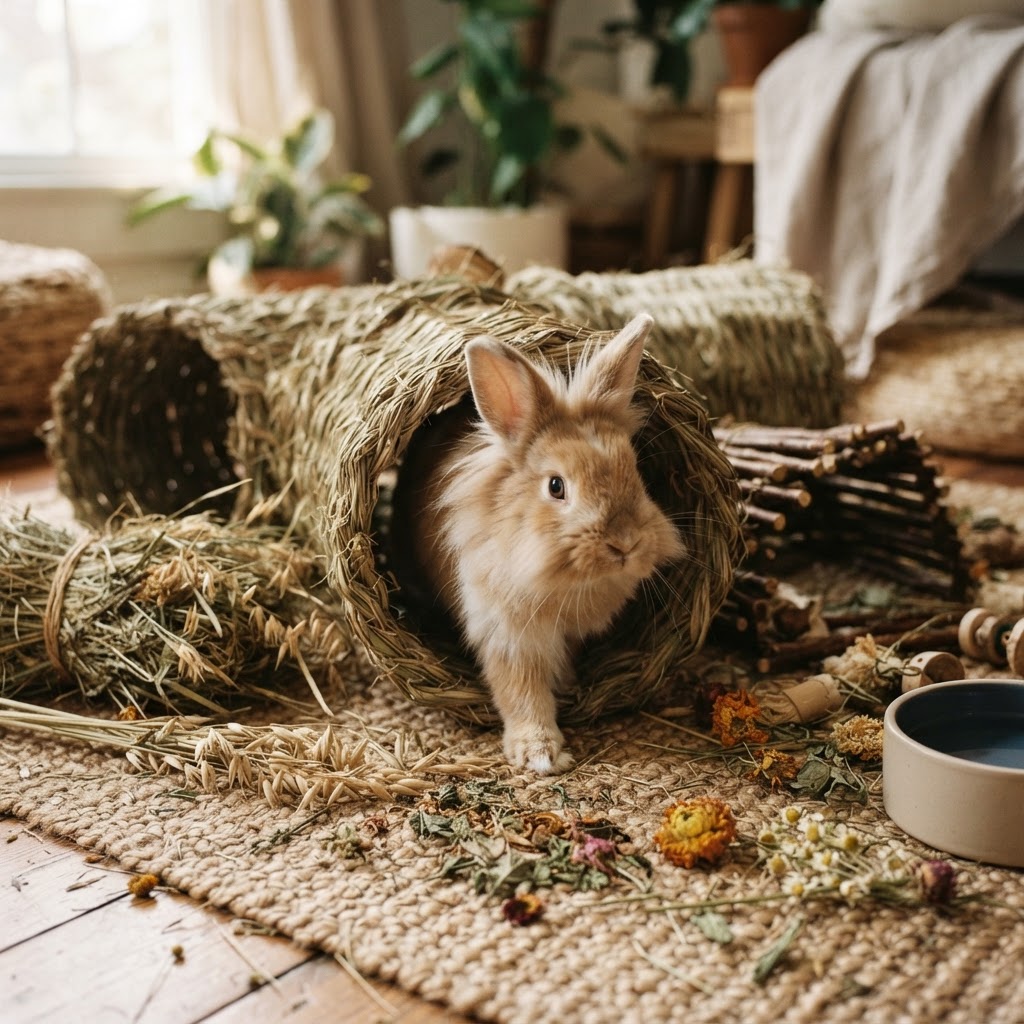
- Woven grass or seagrass tunnels are safe to gnaw and satisfy foraging instincts
- Fleece-lined cuddle sacks offer warmth and texture variety for guinea pigs
- Cardboard boxes with multiple entry points are free and replaceable
Aim for at least one hide per animal, plus one additional — a single shared hideout can become a stress point in multi-pet enclosures.
Foraging and Feeding Enrichment
Wild guinea pigs and rabbits spend the majority of their waking hours grazing and searching for food. Recreating that dynamic in captivity significantly reduces boredom and encourages movement.
Practical foraging ideas include:
- Scatter feeding hay across the enclosure floor rather than placing it all in one rack
- Hiding leafy greens inside tunnels or beneath fleece flaps
- Stuffing paper bags or toilet roll tubes with hay and small herb treats
- Using puzzle feeders designed for small animals to hold pellets
Timothy hay should make up roughly 80% of both species' diets, so the hay itself is your best foraging substrate. Varying the type occasionally — orchard grass, meadow hay, botanical blends — adds novelty without disrupting nutrition. For more ideas on what to feed alongside enrichment activities, browse our small pet recipes and feeding guides.
Flooring and Texture Variety
Hard, smooth flooring causes pressure sores on rabbit feet and provides no sensory interest for any small pet. A thoughtful habitat uses multiple surface types so animals can choose what feels right for them at any given moment.
Consider layering:
- Fleece liners for softness and warmth
- Compressed paper bedding in digging zones
- Natural grass mats for texture and light chewing
- Cork tiles or rubber-backed mats for grip near ramps or transitions
Avoid cedar and pine shavings, which release aromatic compounds that can damage small animal respiratory systems over time.
Social Enrichment and Companion Housing
Guinea pigs are among the most socially dependent small pets kept in the United States — in Switzerland, it's actually illegal to keep a guinea pig without a companion. While the US has no such law, the science is clear: solitary guinea pigs show higher stress hormones and shorter lifespans on average than bonded pairs or groups.
Rabbits are also social, though their pairing process requires careful bonding work to prevent aggression. A same-sex neutered pair is typically the safest combination for new owners.
If you're considering adding a second pet or working through a bonding process, our small pet care hub has step-by-step guidance for introductions and long-term companionship.
Rotation: Keeping the Environment Fresh
Enrichment loses its effect when animals habituate to the same setup week after week. Rotating toys, hides, and foraging setups every 7–10 days restores novelty without requiring new purchases. Pull out a tunnel for two weeks, then reintroduce it — to your guinea pig, it may as well be brand new.
Keep a small "enrichment box" of items in rotation so you always have something to swap in.
Frequently Asked Questions
How much space does a guinea pig actually need? Most welfare organizations now recommend at least 7.5 square feet for a pair of guinea pigs, with larger groups needing proportionally more. Standard pet store cages are almost always too small. C&C grid enclosures are a popular, affordable way to meet proper size requirements.
Can rabbits and guinea pigs share the same habitat? Housing them together is generally not recommended. Rabbits can injure guinea pigs physically, even without intent, and they carry bacteria that can cause serious respiratory illness in cavies. Each species does best with companions of its own kind.
What is the safest chew material for small pets? Untreated applewood, willow, and kiln-dried pine are widely accepted as safe chew options for both rabbits and guinea pigs. Avoid anything dyed, varnished, or made from aromatic woods like cedar. Woven grass toys also satisfy chewing needs while being fully digestible.
How do I know if my rabbit or guinea pig is bored? Bar-chewing, repetitive circling, overgrooming, and a dramatic reduction in activity are all behavioral signs of environmental boredom or stress. Introducing foraging activities, new hides, and regular out-of-cage time often resolves these behaviors within a few weeks.
Do guinea pigs need toys specifically marketed for them? Not necessarily. Many of the most effective enrichment items are DIY or repurposed — cardboard boxes, paper bags stuffed with hay, toilet roll tubes, and untreated wood offcuts all work well. What matters is variety, safety, and regular rotation rather than branded products.
How important is lighting in a small pet habitat? Both rabbits and guinea pigs benefit from a natural light cycle with roughly 12–16 hours of light and a consistent dark period. Avoid placing enclosures in direct sun, which can cause dangerous overheating. Indirect natural light supplemented by standard room lighting is generally sufficient.
When your rabbit binkies across a fresh foraging scatter or your guinea pigs wheek with excitement over a rearranged hide, you'll know the effort was worth it. Ready to go further? Explore our small pet care guides for habitat setup checklists, or check out our feeding and recipe section to pair great enrichment with an equally great diet.

