
Creating an Engaging Environment for Pet Parrots
If your parrot spends most of the day sitting quietly on a single perch, something important is missing. Parrots are highly intelligent, socially complex birds that need consistent mental and physical stimulation to stay healthy and happy. This article walks you through practical, expert-backed strategies for building a rich daily environment—covering foraging, socialization, toys, and habitat design—so your bird can truly thrive.
Key Takeaways
- Parrots need daily mental stimulation to prevent feather-destructive behaviors and chronic stress.
- Foraging activities—hiding food inside toys or wrapping treats—tap into natural instincts and keep birds occupied for extended periods.
- Rotating toys every one to two weeks prevents boredom and maintains novelty.
- Perch variety (different materials, diameters, and textures) supports foot health and encourages natural movement.
- Social interaction with their human flock is a non-negotiable part of pet parrot enrichment.
- Loud vocalizations and feather plucking are often the first signs that a bird's environment lacks adequate stimulation.
Why Pet Parrot Enrichment Matters More Than Most Owners Realize
Wild parrots spend the majority of their waking hours foraging, flying, and interacting with flock members. A pet parrot in a standard cage setup has none of those demands built in—and that gap creates real behavioral problems. Research on psittacine cognition consistently shows that birds like African Greys, Amazon parrots, and cockatoos operate at cognitive levels comparable to a human toddler in certain problem-solving tasks. When that level of intelligence has nothing to engage it, the consequences show up fast: screaming, biting, feather destruction, and repetitive behaviors.
The good news is that meaningful enrichment doesn't require expensive equipment or hours of your time each day. Consistent, thoughtful effort makes the biggest difference.
Designing the Habitat Itself
The cage is the foundation of your parrot's world, and its layout directly shapes behavior. A cage that is too small, too sparsely furnished, or poorly placed sets every other enrichment effort back before it even starts.
Size and Placement
Bigger is always better, but the right minimum depends on species. For a medium-sized parrot like a conure or Pionus, the bar spacing should be no wider than three-quarters of an inch, and the bird should be able to fully spread both wings inside without touching the walls. Placement matters too—a corner position with visibility into the main living area gives the bird a sense of being part of the household without the anxiety of being exposed on all sides.
Perch Variety
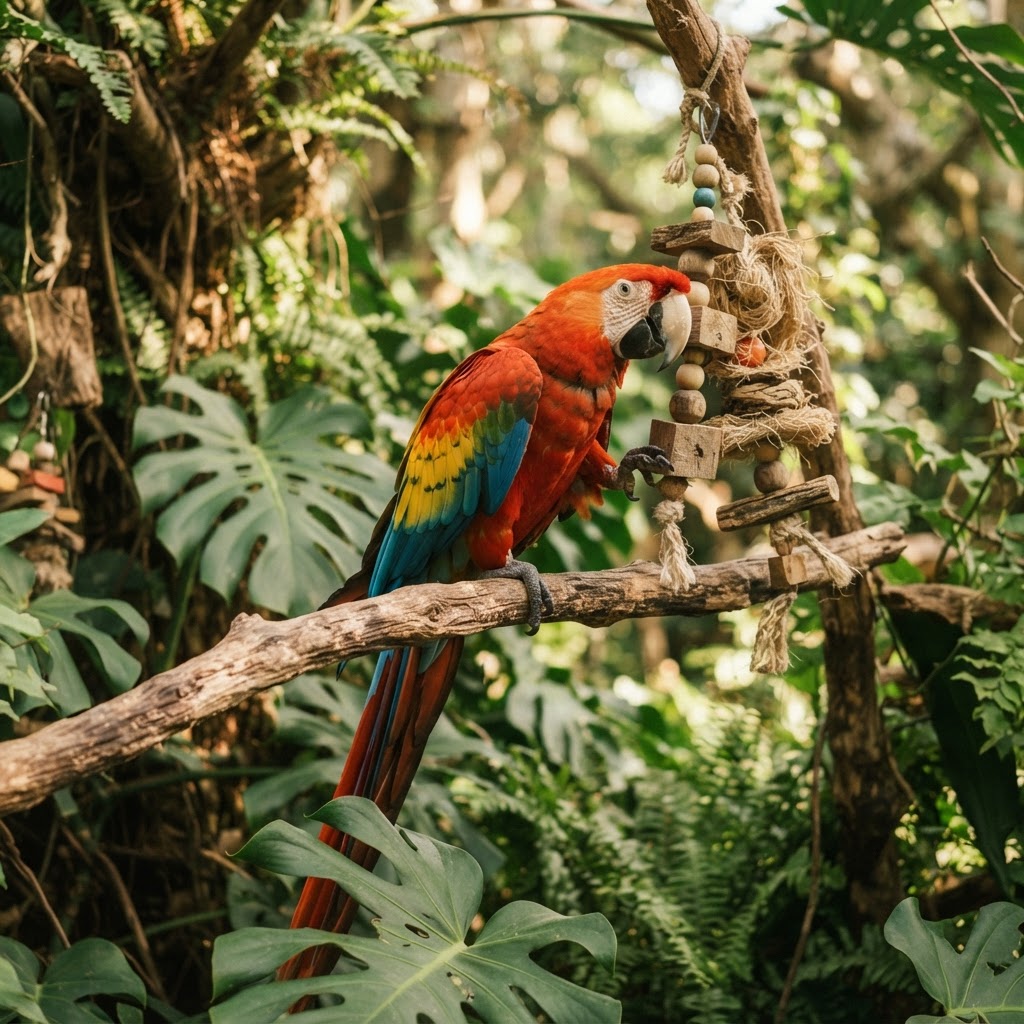
Skip the identical dowel rods that come standard with most cages. Different perch diameters force the foot muscles to adjust, reducing the risk of pressure sores and arthritis over time. Natural wood branches from bird-safe trees like manzanita, java wood, or untreated willow give irregular surfaces that are genuinely stimulating. Rope perches add a soft option that many birds enjoy near sleep areas. Rotating two or three perch styles every few weeks keeps things fresh.
Foraging: The Single Biggest Enrichment Upgrade You Can Make
Foraging—encouraging a parrot to search and work for its food—is the most evidence-supported form of pet parrot enrichment available to home owners. In the wild, parrots might spend four to eight hours a day locating and extracting food. Giving your bird pre-filled bowls with no effort required eliminates all of that cognitive work.
Start simple. Wrap a piece of fruit in a paper towel and let your bird tear it open. Stuff a foraging toy with pellets and hang it at a challenging height. Hide small treat pieces under layers of crinkled paper in a flat dish. As your bird gets comfortable with the concept, increase the difficulty—use multi-step foraging toys that require pushing, pulling, or unscrewing components to access the reward.
For species-appropriate diet ideas that pair well with foraging activities, check out the bird-friendly recipes on the Simply Petastic recipes page.
Toys, Rotation, and Mental Challenges
Toy variety and regular rotation are essential to preventing habituation—the process by which a bird stops responding to a once-interesting object. A parrot that sees the same three toys month after month will eventually ignore them entirely.
Categories of Toys Worth Having
- Shredding toys: Palm fronds, balsa wood, cork, and vine balls satisfy the urge to destroy and are especially popular with cockatoos and macaws.
- Puzzle toys: Acrylic or wooden puzzles that require opening latches or moving pieces to reveal food provide genuine problem-solving challenges.
- Sound toys: Small bells, rattles, and clickers engage birds that are highly vocally active—just be mindful of noise levels in smaller species.
- Foot toys: Small, lightweight objects parrots can hold and manipulate in one foot while perching mimic natural object handling.
Aim to rotate at least one toy per week, reintroducing older toys after a month away. A toy that returns after an absence often gets treated like something brand new.
Social Enrichment and Out-of-Cage Time
Daily direct interaction with a trusted human is a biological need for flock-oriented parrots, not a luxury. Aim for a minimum of two hours of out-of-cage time each day for most medium and large species. This doesn't all have to be hands-on training—simply having your bird on a play stand near you while you work counts as meaningful social time.
Training sessions using positive reinforcement are one of the highest-value activities you can offer. Even five to ten minutes of target training or trick-building per day builds trust, exercises the brain, and gives your bird a sense of accomplishment. Keep sessions short and end on a success.
For a deeper breakdown of daily care schedules and species-specific needs, visit the Simply Petastic bird care guide.
Frequently Asked Questions
How many hours a day should I spend on pet parrot enrichment? You don't need to be hands-on for hours at a time. Two to three total hours of engagement—split between foraging opportunities, out-of-cage time, and short training sessions—covers the basics for most medium species. The key is consistency rather than marathon sessions on weekends.
What are signs my parrot isn't getting enough enrichment? Feather plucking, excessive screaming, repetitive pacing or head-bobbing, and aggression toward hands are the most common warning signs. These behaviors can also signal health issues, so a vet check is always a good first step if you notice sudden changes.
Are there safe household materials I can use for foraging toys? Yes. Plain paper cups, cardboard egg cartons, unbleached paper towels, and untreated cardboard boxes are all safe shredding and foraging materials. Avoid anything with dyes, glues, staples, or metallic finishes.
Can small birds like budgies and cockatiels benefit from the same enrichment strategies? Absolutely. Foraging setups, perch variety, and toy rotation benefit small species just as much as large parrots. Scale the size of toys and food pieces appropriately and ensure foraging challenges are manageable for smaller beaks.
How do I introduce a new toy without scaring my bird? Place the new toy near the cage without putting it inside for two to three days so the bird can observe it from a safe distance. Then move it to a spot outside the cage door before eventually hanging it inside. Pairing the toy with a favorite treat during introductions also helps build a positive association.
Is it okay to leave music or TV on for my parrot during the day? Yes, and many parrots respond well to background sound when left alone. Nature documentaries, calm music, or talk radio can provide mild auditory stimulation. Avoid anything with very loud, sudden sounds, and keep the volume at a comfortable level.
Ready to take your bird's daily routine to the next level? Browse species-specific bird recipes and treat ideas or explore the full Simply Petastic bird care library to find everything you need to keep your feathered companion healthy, stimulated, and genuinely content.

